Curated chronicles of the innovation, news and events as it unfolds

Contact us

Golden Earth Studio operates solely through bespoke commissions that utilise the construction by-products of our clients homes. To explore the possibilities of commissioning a unique piece of art work that fits seamlessly into your interior space, get in touch via our contact form.

Add Your Heading Text Here

Reframing Waste

12 | 11 | 2025

An exhibition exploring how discarded materials can be transformed in value when placed in the right hands.


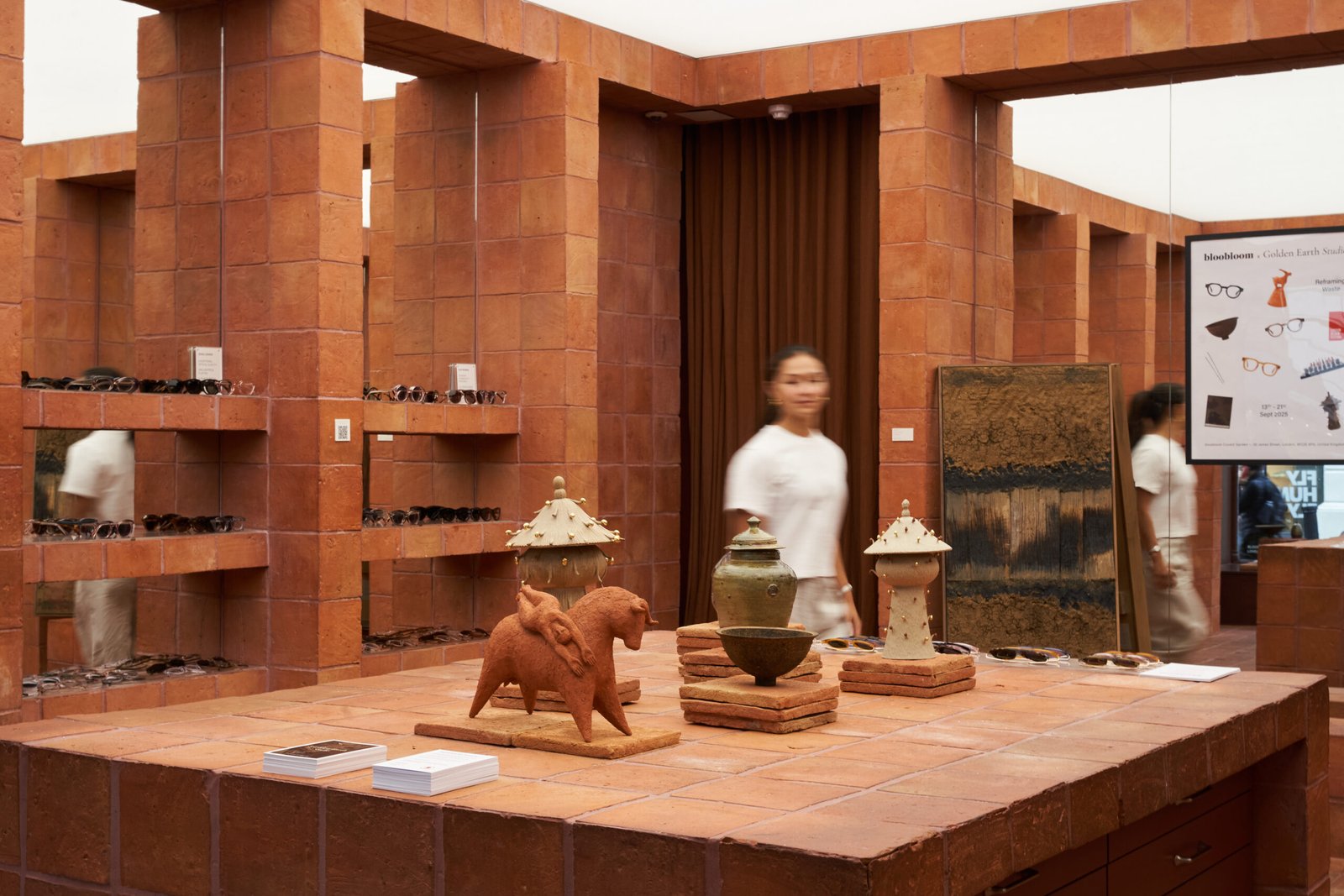
For London Design Festival 2025, artworks crafted from London’s excavation waste by the artists of Golden Earth Studio found a home in Bloobloom Covent Garden.


Together, we created a clay immersion that brought two worlds together, design and craftsmanship, united by a shared vision: that beauty, responsibility, and transparency can and should coexist in every object we choose to wear or display.


Read more about the exhibition in this article by Avesso Magazine:

https://www.avessomagazine.com/art-lifestyle/reframingwastebloobloomxgoldenearthstudioatlondondesignfestival2025

735kg Reclaimed

29 | 10 | 2025

What if every time we built a home, local communities benefitted too?


That’s exactly what happened when Studio Rovik collaborated with Goldenb Earth Studio and opened their doors to London creatives to collect freshly excavated clay straight from their site.


In just one week, 42 creatives signed up and 735kg of clay was saved from landfill, bagged up and taken back to studios across the city to be given a new life.


A huge thank you to Vivek for joining Golden Earth Studio in our mission to make waste accessible. The incredible response shows just how valued secondary resources are, and why we need to do more to keep materials in circulation across construction sites.

Ekta Bagri Residency

05 | 10 | 2025

In October, Golden Earth Studio welcomed artist DPhil research Ekta Bagri to a construction site in Wimbledon, for a one-day, in situ residency.


Ekta produced a set of three rammed earth blocks for our exhibition ‘Reframing Waste’ in Covent Garden for London Design Festival 2025.


Golden Earth Studio interviewed Ekta to learn more about her practice and the philosophy behind her work.


Can you introduce yourself and your practice?

I’m Ekta, a DPhil researcher in Archaeology at the University of Oxford. My practice sits at the seam of making and archaeology: I learn through doing, working on sites, rebuilding kilns, preparing clay in situ, and reading surfaces as records of process. This hybrid approach, fieldwork, studio experiment, and clear documentation- shapes both my research and my making, from wood-firing traditions and kiln archaeology to public-facing displays and teaching.


What drew you to explore clay in your practice?

Clay holds touch. It remembers gestures, pressure, and the habits of hands, ours and those before us. I’m drawn to that memory and to provenance: where a material comes from, what it has weathered, and how its character emerges under care. Clay is malleable yet willful; it stretches under patient moulding and resists when rushed. Working with it is a conversation, one where the material’s own timing and breath matter as much as my intention. 


Where do you find inspiration for rammed earth techniques and material compositions?

My research is rooted in materials and in the ethics of waste. I use unfired processes to foreground location, provenance, and the materiality of Earth, so that pieces can be made, deconstructed, and returned to the ground. Much of my raw material comes from waste soils, often wild-clay rich, diverted from construction sites. Rammed earth and bio-based binders (including bacteria-driven “bio-concrete”) help establish living conditions within a piece: moisture moves, clay breathes, salts bloom. The work is dialogic, formed through conversations with researchers, construction teams, gardeners, and local residents, so it can bridge human and non-human worlds and make space for an ecology of materials.


Had secondary resources played a role in your work before your collaboration with Golden Earth Studio? Why does engaging with by-products hold significance for you?

Yes. I’ve long worked with what’s at hand, offcuts, spoil, and by-products, because they carry site-specific stories and responsibilities. I align with care-based thinking (after Maria Puig de la Bellacasa): maintaining and repairing the world so that more than just “we” can live well. For me, using by-products tests what our environment could look like if we changed our defaults, valuing cyclical making over extractive novelty. It also widens authorship: material agencies (bacteria, minerals, moisture) become collaborators, not just “inputs.”


Can you outline what material you are working with from GES and how you transform it in your ceramic practice? What is the material like to work with?

From Golden Earth Developments (GES) I work with excavated subsoils and wild clays gathered directly from live or recent construction sites. On site, I assess grain size, plasticity, and moisture; then I sieve, temper, and compact the mixes in layers to ram blocks that can be functional or sculptural. The material is raw and honest, its behaviour depends on weather, water content, and how gently it’s compacted. Working where the soil emerges lets me keep provenance legible: you can read the section, the strata, and, later, the drying marks as part of the piece’s biography.


Can you give an outline of the in situ residency at Golden Earth Studio? What was the physical setup, and how did working on-site influence your practice?

I worked with GES at their Wimbledon project, producing rammed-earth blocks from excavated soils that would otherwise go to landfill. The setup was deliberately light and open: sieves, formwork, tampers, moisture tests, and curing racks right beside the dig. Making in situ sharpened the feedback loop, soil tests led directly to mix adjustments, and the pieces recorded that iteration. Rammed earth has been central to my practice since my RCA degree show (2023); its temporality is essential to me: because the clay isn’t fired, the blocks can be unmade and returned to the ground, completing the cycle.


How do you see your rammed-earth blocks integrating into and enhancing everyday living environments?

I design the blocks as adaptable, low-impact elements that slip into everyday life. They can act as partition walls, plinths, benches, joinery infills, adding mass without heavy finishes. Because the earth remains unfired, it moderates humidity and temperature and lends acoustic calm, qualities you sense rather than see. Surfaces invite maintenance rather than disposal: chips and edges can be re-rammed or skim-coated, and patina is welcomed as a record of use. As dry-assembled modules, the blocks can be reconfigured, crushed and re-compacted, keeping material cycling locally. In all of this, the aim is to let “waste” read as quietly beautiful and genuinely useful, objects that earn their place through care, material honesty and the possibility of return.


Subsurface by Hal Strode

16 | 09 | 2025

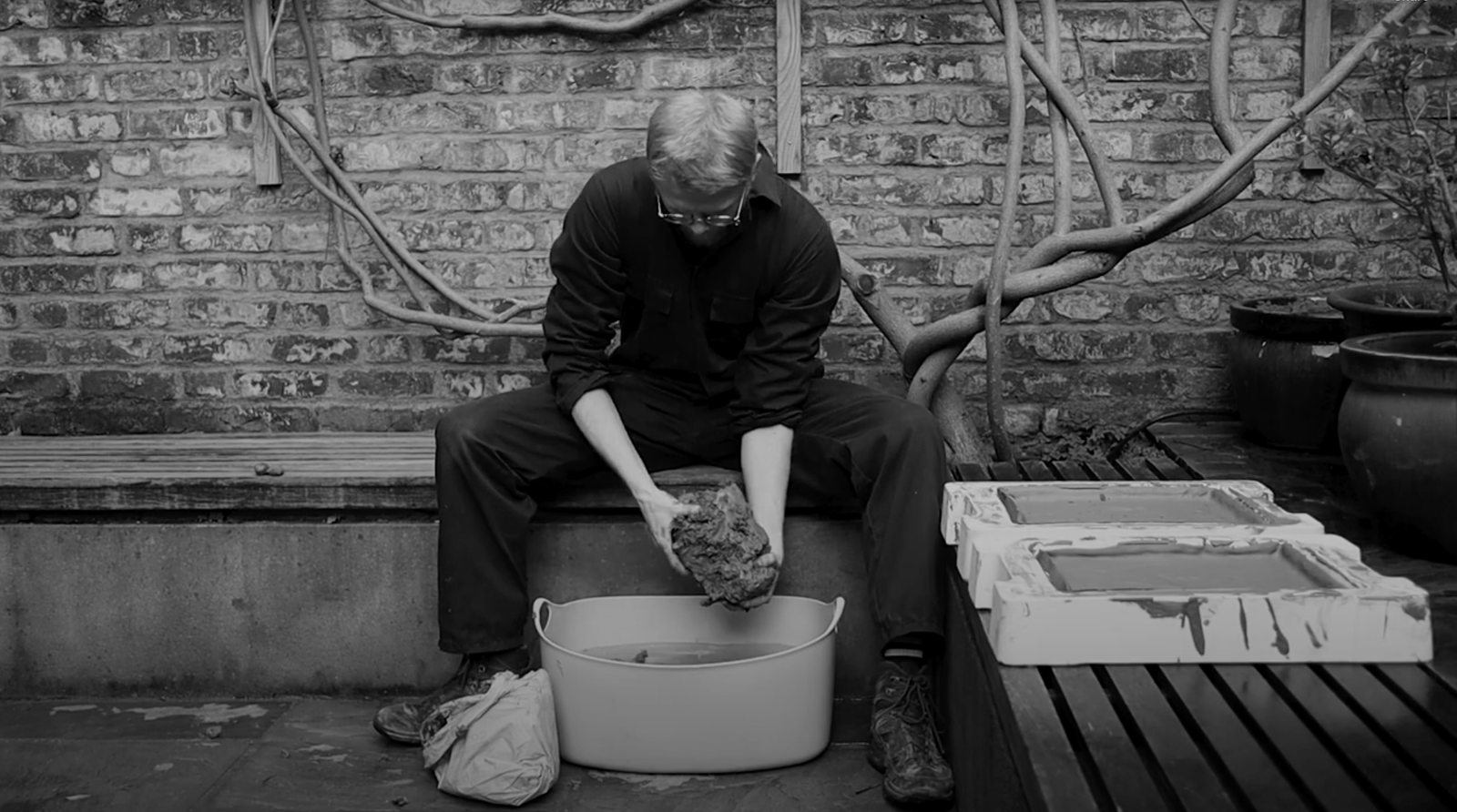
Subsurface is a short film that documents Hal’s engagement with process and material. The work explores the relationship between breath, body, and clay, centring on themes of impermanence and release.


Drawing on Hal’s experience as a freediver, the film reflects on how the act of holding breath and surrendering control to the ocean becomes a means of being fully present.


The clay, excavated from London’s construction sites and made available through Golden Earth Developments, is dug, shaped, and returned, mirroring natural cycles of transformation and return.


Explore caputres of the film on our homepage and the full film on Hal’s Website: https://www.studiostrode.com/work/subsurface

Arran Gregory

14 | 07 | 2025

In early July, Golden Earth Studio welcomed artist Arran Gregory to an unfolding space, a construction site in Wimbledon, for a one-day, in situ residency.


No fixed expectations, no predetermined outcomes. Simply a moment of immersion, an open-ended dialogue between artist and environment, where raw materials and architectural forms became a field for reflection and response.


Set among scaffolding and rising structures, Arran established a temporary studio, allowing instinct and material to guide his process.

In the conversation below, we explore Arran’s evolving relationship with clay, his sculptural language, and what it means to create within the transitory energy of a construction site.


Introduce yourself and your practice.


My name is Arran Gregory, I am a British- Sri Lankan sculptor. Throughout the past year, I have been travelling across the globe creating ‘Earth Body’ sculptures – a series of meditative explorations into raw earth leading me into various wild habitats, and to live alongside remote indigenous communities.

 Here I have been working directly with and in response to the landscape where I use clay, soil, pigment and various other found natural materials. I see these materials as an extension of the human body, carrying time, memory, ancestral knowledge. 

Through my practice I am responding to the land through the experiential- letting the environment speak through the work as time passes. Nothing is fixed, many pieces are ephemeral, I am learning to let go. 

I’m interested in what happens when we stop trying to control the outcome, when we let the earth shape us as much as we shape it.

What drew you to explore clay in your recent works?

I had spent a month living in a forest in Finland as part of an art residency where I handed my phone in. Having no internet or way to research meant I spent time with my materials and experienced them through trial and error – their properties and behaviours revealing themselves to me through physical exploration and touch.

Clay felt like a natural place to begin- it’s immediate, unprocessed, and already present beneath our feet. I made a decision early on not to source anything manufactured. I didn’t want to impose materials onto the landscape, but to work only with what was already there. I started discovering hyper-local materials which felt so overlooked. 

I feel there’s a quiet beauty in not creating something new, but allowing something to arrive through the act of being present over the course of time. Clay carries that possibility. It’s ancient, alive, and deeply human. In many ways, it’s not about making a sculpture, it’s about entering into a conversation with the land, and letting that guide what takes form. Discovering this has led me to capture my process through film and performance.  


Where do you find inspiration for the forms, colours and textures?


I take inspiration directly from the environment I’m working in. In the city, that’s meant paying close attention to what’s underfoot – red brick dust, yellow road markings, chalk or charcoal washed up by the Thames. I’ve been using these elements to build a kind of grounded, site-specific language.

At the same time, I’ve been developing a burnished chrome surface in response to the industrial, high-gloss edge of the city. I’ve been calling these works ‘Techno clay’. I’m exploring something ancient and something synthetic, a kind of tension between the earth and the built environment, between the raw and manmade. 


Had secondary resources played a role in your work before your collaboration with Golden Earth Studio? Why does engaging with by-products hold significance for you?


I’ve only recently started working with construction clay waste as I’ve been working remotely so far. This has marked my return to the city, where finding truly raw, local clay has proven almost impossible. The Thames clay is heavily contaminated, and much of the land is privately owned, so you can’t just dig into the ground like you can in remote landscapes.

Having worked with wild clays in forests and jungles, I’ve never seen clay as a ‘product’, it’s always been a living, fundamental part of the real world. Thinking of clay as a waste/ byproduct highlights just how disconnected we’ve become from raw materials in the city. The material relationship has been detached from the lands inhabitants and placed solely into the hands of the construction sector. For me, it’s a way back into that material relationship, one that offers a truer understanding of the self. 

Working with what’s been discarded feels important now. We’re in a time where every act of making has to be questioned -not just what we create, but how and why. So much sculpture today is just more ‘stuff’, with a heavy footprint. Using what already exists (even in its leftover or rejected state) is an act of grounding. It’s a way to create with circular awareness, and to return attention to the earth and what truly exists. 


Can you outline what material you are working with from GES and how you transform it in your ceramic practice? What is the material like to work with?


I’ve been working with clay that was excavated during the foundation work for a new building in London. I spent a day on-site with the builders, working directly in response to the environment, forming four pieces. 

I also collected pigments from the site like crushed red brick and rock fragments from the foundations which I’ll be using to burnish and finish the surfaces. These pieces will remain unfired, breathing with the atmosphere, rather than being fixed in a final state.


The clay itself contains fragments from across time. It holds the memory of the city, of machine and human hands. I’m not trying to refine that out, i’m trying to let it speak out through the works. 


Can you give an outline of the in situ residency at Golden Earth Studio? What was the physical setup, and how did working on-site influence your practice?


I was given a site introduction by the manager and the history of the site was shared. I then built a makeshift work table from some breeze blocks and plywood found under tree shade nearby. Working alongside the builders I had some interesting conversations about environmentally sustainable building techniques and materials that I could implement. It seems construction and the sculptural works I am doing are not a million miles apart, we have a lot to learn from one another. It made me realise how closely aligned ethical construction and my practice really are- both involve reshaping earth, reacting to and structuring space, and forming relationships from the earth’s materials. 


How do you see your sculptures integrating into and enhancing everyday living environments?


Because my sculptures are raw and unfired, they remain open and responsive – absorbing humidity, releasing moisture, and shifting subtly with the atmosphere. In German, there’s a term Raumklima, which describes the climate or feeling of a room, a balance of temperature, air, and material that affects how we exist within a space. Clay plays a natural role in this. It’s been shown to help regulate humidity, improve indoor air quality, and reduce pollutants.

I’m interested in how these sculptures can become more than static objects and how they can live within a space, and even support it. Like earthen floors or clay walls, they can be touched, felt, and experienced on a sensory level. I think of them as instruments for the mind’s-touch, a way of reconnecting to our bodies, to matter, and to an instinctive way of being.


County Hall Pottery Masterclass

17 | 06 | 2025

As part of Groundworks at County Hall Pottery, an exhibition curated by Elena of Glost Glaze, Golden Earth Studio was invited to lead a masterclass delving into the creative and material potential of local clays.


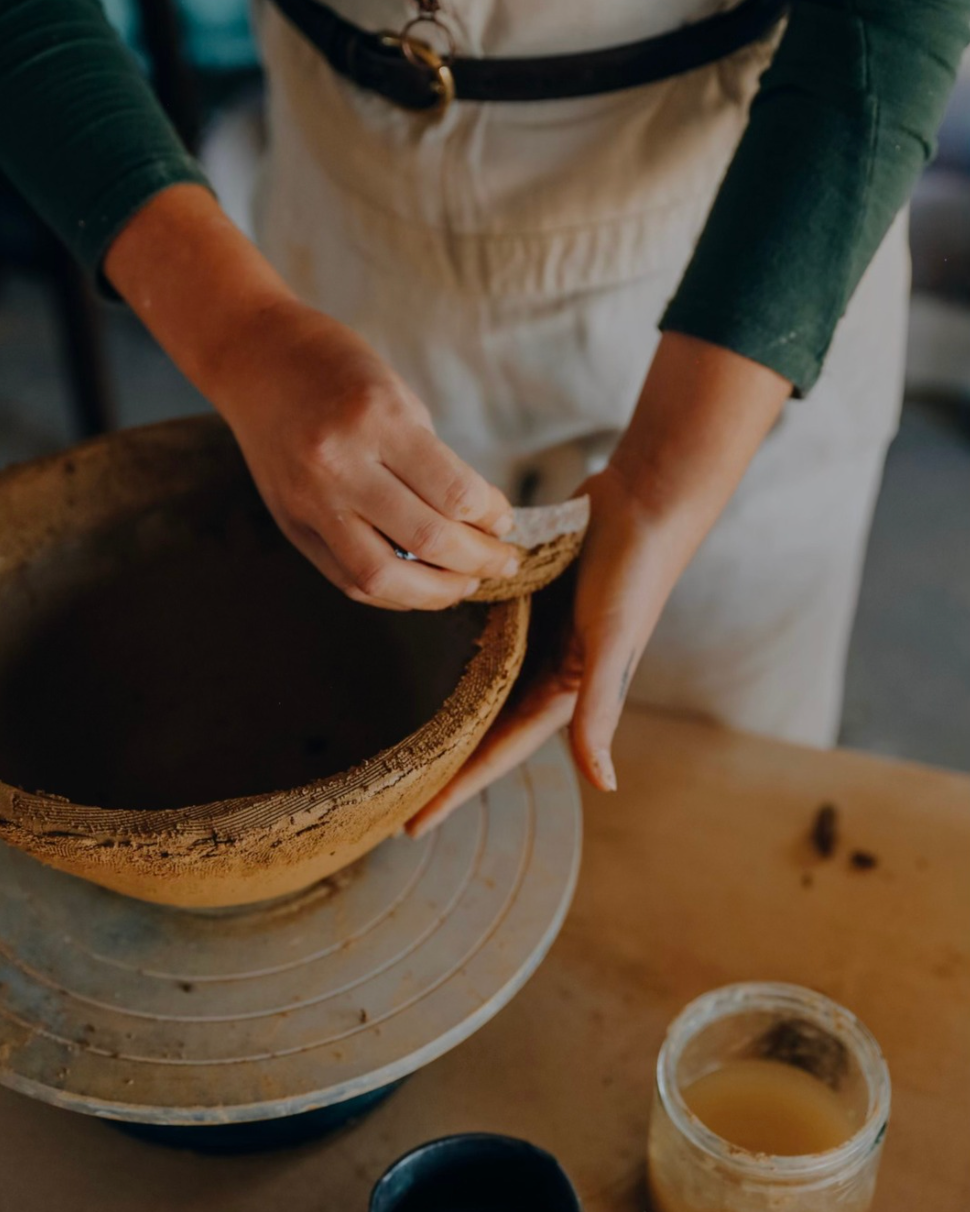
Rooted in our ongoing dialogue with construction waste, the session opened with a conversation around material origin, value, and the complexities of working at the intersection of art and industry. Participants were invited to engage with these tensions through hands-on exploration, developing a series of clay bodies, slips, glazes, and engobes, all sourced from a single reclaimed waste stream. What emerged was a shared database of knowledge that not only mapped process and possibility, but also equipped each maker to reimagine construction clay within the contours of their own practice.

London Craft Week 2025

12 | 05 | 2025

We were grateful to present Golden Earth Studio at County Hall Pottery as part of London Craft Week, with special thanks to Elena of Glost Glaze for the invitation.


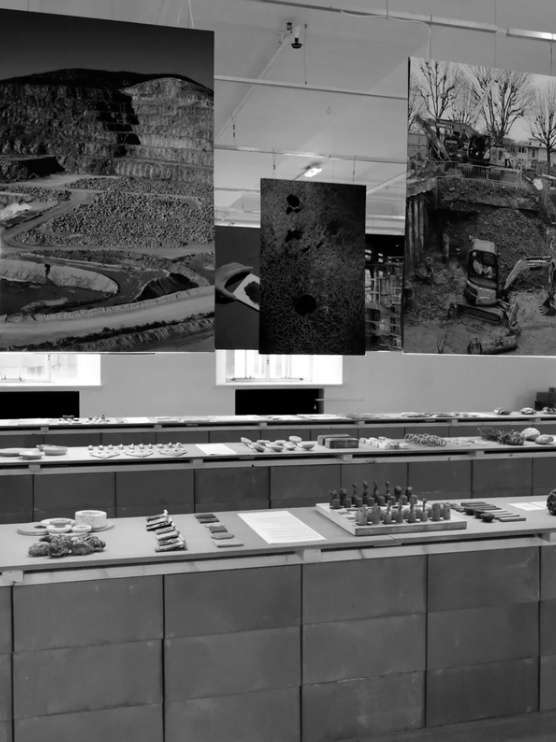
The exhibition brought together a curation of material explorations that foregrounded unconventional approaches to making. It was a pleasure to be among such innovative ceramic work, much of which challenged and redefined the boundaries of traditional practice. We were proud to showcase the Golden Earth Studio Chess Set by Jacob Chan, crafted from London’s construction clay, marble offcuts, and reclaimed timber.

GES Masterclass Workshop

17 | 05 | 2025

A practical workshop exploring the properties of London construction clay and its potential applications in a ceramic practice. Led by ceramicist Sara Howard, participants will collaboratively develop a range of clay bodies, glazes, slips, and engobes. This hands-on workshop promises to be both informative and engaging.


Date: Saturday 17th May
Time: 1-5pm
Maximum Participants:16
Price: £150


What You’ll Learn:
As part of our workshop, attendees have the unique opportunity to work with London construction clay collected from a 12–14m deep excavation at a construction site in Wimbledon.

Meet Olla Ceramics

05 | 01 | 2025

As we start a new year, Ariana Kier of Olla Ceramics, becomes our US representative. Ariana is a ceramicist and soil catalogist based in San Diego, California, who leads clay workshops for artists, focussing on foraged materials.

Together, we have worked towards intercepting clay from construction sites in the US, using the same philosophy and framework we have developed in London. We are excited to give more creatives access to materials that would otherwise be on their way to landfill, providing an alternative to commercially mined minerals.


Read our interview with Ariana below:


Can you share your journey into becoming a ceramicist and soil catalogist? What initially drew you to working with local materials, and how has this focus evolved over time?

My early ceramics career was focused on dinnerware for restaurants. I longed for my work to have a deeper connection with nature, the kind I had when burrowing my hands into earthenware under oak trees as a child. Integrating natural materials felt like a massive undertaking, and there were less educational resources then. When I left the city after a few years and returned to my family’s home in the mountains of San Diego, I picked up a Kumeyaay pottery shard from the wet earth after a rain. It clicked that I was surrounded by the wisdom to integrate these materials, and the elders’ spiritual framework of how to connect to them. I could never express enough gratitude for the expertise and insights shared with me by the Kumeyaay community, past and present. They are the longest standing collective of artists and material scientists available and I encourage anyone beginning with natural materials to look to the indigenous people of their area.


The sediment collection expanded with voracity once I began integrating the byproducts of the clay processing (twigs, small stones, sand, etc.) into my work. I started to see all natural materials as potential contributors to the story of their source location. I try my best for the pieces to still appear natural in their original environment, either by complement or contrast, which is why I often bring the pieces back to the collection site to photograph.


The goal of my work is to share my truth, that the soil beneath our feet is novel, beautiful and living. Maybe, if something so frequently overlooked can become fascinating and admired by the average person, our collective sense of wonder and protectiveness about the Earth will expand. The collection continues to grow from the contributions of many lovely people who bring me clays, ochres, ashes, and stones from their corners of the world. I’m warmed by the lasting friendships I have built over a ferocious love for hand-harvested clay.


Golden Earth Studio provides a platform to make construction clay waste accessible. What motivates you to work with these materials, and what unique challenges and rewards do they present?


I appreciate that foraged materials are not manufactured for performance; each holds its own unique strengths and weaknesses, which forces me to step back as the sole influence and allow the material to guide the work. Creating with single-sourced clay feels like being in dialogue with the DNA of a specific place in nature, and I strive to make work that can advocate for that place. I much prefer this experience over the sense of domination I feel when trying to push porcelain to its limits. The time spent processing and testing a foraged material develops a personal bond before the making begins—something you can’t replicate by purchasing clay or glaze material in a store. 


How do you believe Golden Earth Studio’s approach to using construction clay waste can influence both the ceramics and construction industries? 


Well unfortunately, connection is not built into the capitalistic model, each individual is forced to work towards an end goal, and the relationships between most industries reflect that. Opening communication between these groups seems so simple. A contractor pays to dump displaced clay from their worksite into a landfill, while a potter drives by toward their local clay shop and purchases a bag of clay for $25-$45. The price includes the labor of mining, factory processing and global shipping, but not the environmental costs. The potential for symbiotic relationships is all around us, yet it requires active effort in a non-egalitarian society that does not inherently promote such collaboration. 

When I led clay foraging workshops in Los Angeles, I encountered professional potters who, as residents of an urban sprawl, had no real access to sufficient quantities of natural material to substitute their use of commercial clays. Yet, new foundations are being dug in the county around the clock. I’m incredibly grateful for the system that Golden Earth Studio has built to foster these connections. It is a brilliant symbiotic relationship, one truly tailored to the modern world. Artisans have an opportunity to be part of a distinguished global collection created for the good of the planet.


Can you share examples of projects or pieces you’ve created that demonstrate how using local materials contributes to a sustainable ceramic practice?

It’s been many years now tinkering with new concepts and collections based on different natural techniques. The Kumeyaay, the indigenous people of my area, use cactus gel to increase the plasticity of their rough earthenware. By combining wild clay sand byproducts, gathered from the mountain that leads to this stretch of coastline, and the extracted gel from native kelp, I can increase the functionality and create endless variations in the texture of the clay bodies I already have in my studio. I’ve omitted glazes almost entirely, preferring to employ instead low-fire clays which melt at the same temperature my clay vessels mature.

I’ve found great variation in color by exploring the sulfides and other contaminants in urban runoff (with strict safety protocols for collection and handling, of course). This was the theme of a collection of moon jars I made from the famous skim-boarding spot in Laguna Beach, Aliso Creek. Local Seafood restaurants provide me with leftover oyster shells to make whiting for glazes, the opportunities with natural materials are truly endless.

What vision do you have for the future of Golden Earth Studio and its role in promoting sustainable practices in the arts and construction? How do you see your role contributing to this vision?

I’m honored that Golden Earth Studio has entrusted me to help expand their initiative to the US. I view it as a joyful opportunity to bridge communities in Southern California and hope it inspires more international collaborators to join in and expand it to their own cities. Perhaps the model will even inspire new connections within other industries. Symbiotic relationships are a fundamental law of nature, it feels natural to work toward fostering these connections. My personal goal has always been to be of service to my fellow living beings, the evolution of my craft and the prosperity of my home planet. Kahil Ghabrin wrote “Work is love made visible,” and I see this work with Golden Earth Studio as a reflection of that

Ceramics Monthly

15 | 09 | 2024

An article about GES beginnings and how it has evolved in the current climate of today.

Circular Ceramics

01 | 04 | 2023

Delve into the beginnings of Golden Earth Studio and how it was born to break down barriers in the construction industry in the pursuit of circularity.

Purchase the e-book and hard copy here

Excavation Developments

31| 01 | 2022

A 4 metre deep basement has been carved out of the property site as a result of the excavation process. This has revealed the two different layers of clay. The upper portions consist of alternating clays and sands, known as the Claygate Beds. The lower half is blue London clay. These formations are from the Eocene age, dating back to 50million years old, where quartz is the most abundant material.

Piling Begins

29 | 01 | 2022

Coils of clay extracted from up to 18 metres deep as a result of the piled process. This is where a contiguous series of holes are formed which are then reinforced with steel and concrete and used as a retaining structure forming part of the groundwork’s.

Grand Designs Live Panel Talk

08 | 05 | 2022

Discussing the abundance of Britain’s industrial waste to replace finite virgin raw materials. Panel hosted by Barbara Chandler, founder of Green Grads.

Material Collection

17 | 02 | 2022

First collection of extracted clay from the Wimbledon site. Members of The Clay Garden studio came to collect materials first hand to carry out tests and create a range of samples from the clay.

subscribe for 15% coupon

Lorem ipsum dolor sit amet, te has.